

Private investigator reciprocity is one of the most misunderstood subjects in this profession, and the misunderstanding is expensive. Ask around and you’ll hear that a handful of states “honor each other’s licenses.” That’s not what these agreements do. In our experience, investigators who believe reciprocity means their license travels are the ones who end up explaining themselves to a licensing board.
After 17+ years working cases nationwide, we’ve had to sort this out case by case, state by state. The short answer: private investigator reciprocity exists, it covers fewer states than people think, and what it actually grants is narrow enough that calling it reciprocity oversells it. Here’s what the agreements really are, which states have them, and the rule that catches people.
What Private Investigator Reciprocity Actually Means
Reciprocity does not make your license valid in another state. It does not let you take cases there, advertise there, or open an office there.
What it grants is a limited exemption that lets you follow a case you already started at home across a state line to chase down leads. That’s it. California’s Bureau of Security and Investigative Services describes its agreements as limited reciprocity for exactly this reason: continuing an investigation that originated in your home state.
In our experience, that distinction is the whole ballgame. Private investigator reciprocity is a travel permission for an existing case, not a portable license.
Which States Have Private Investigator Reciprocity Agreements
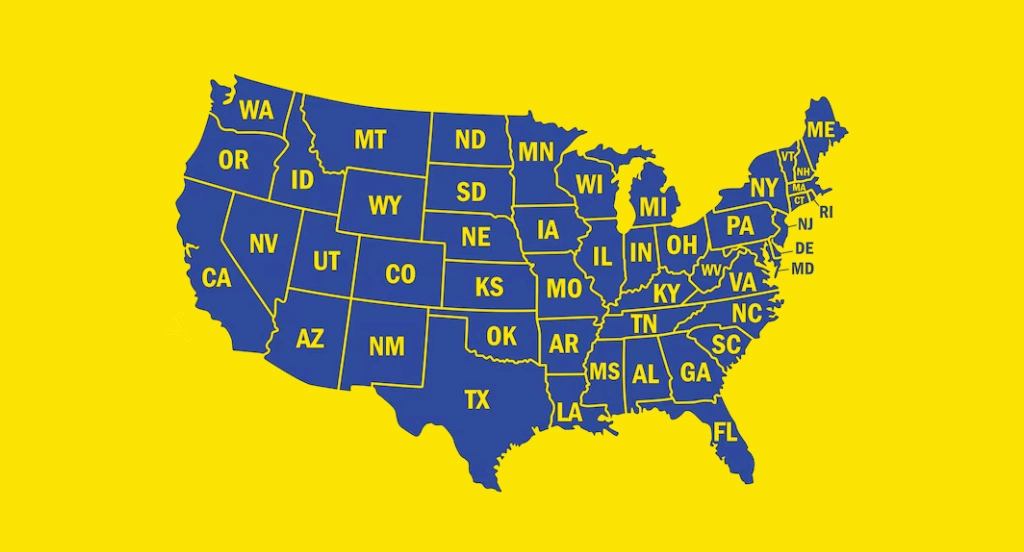
The agreements are bilateral, meaning each state negotiates separately with each other state, and no two lists are identical. This is why you’ll find contradictory answers online. The states that appear across current agreements cluster in the Southeast plus a few others:
- Florida
- Georgia
- Louisiana
- North Carolina
- Tennessee
- Oklahoma
- Virginia
- California
- Oregon
But the pairings matter more than the list. California’s Bureau of Security and Investigative Services holds limited agreements with Florida, Georgia, Louisiana, North Carolina, and Oregon. Virginia’s Department of Criminal Justice Services lists North Carolina, Georgia, Tennessee, Oklahoma, Louisiana, and Florida. Florida reports agreements with seven other states.
Notice those don’t match. Being on the private investigator reciprocity map doesn’t mean you have an agreement with any particular state, only with the specific states your board negotiated with. Check your own regulator’s list, not a summary of everyone’s.
The Conditions Attached
Every private investigator reciprocity agreement we’ve worked under carries roughly the same restrictions:
- The case must originate in your home state. You cannot take a case in the other state. This is the condition that ends careers.
- Time is capped. Florida allows no more than 30 days per case in another state, and similar limits are typical.
- No soliciting. You may not pursue business while you’re there.
- No establishing residence or a business presence. You’re visiting, not operating.
- Notification is often required first. California requires an Out-of-State Private Investigator Notification Form and its approval before you do anything.
That last one deserves emphasis. California warns that working without approval can result in disciplinary action against your license in your home state. Not a fine in California, your license at home. Private investigator reciprocity comes with teeth pointed back at you.
Texas Has No Reciprocity At All
This surprises people, and it’s worth stating plainly because we’re headquartered in Texas. The Texas Department of Public Safety states that Texas has no reciprocal agreements with any other state for acceptance of private security licenses. None. There’s no private investigator reciprocity in or out of Texas, regardless of what a forum post told you.
There is one useful wrinkle: DPS notes that experience legally obtained in another state may count toward the experience requirements here. So your out-of-state work isn’t wasted, it just counts toward earning a Texas license rather than substituting for one.
Texas isn’t unusual in this. Most states have no formal private investigator reciprocity, and as of 2026 there is no universal multi-state license for this profession.
What Reciprocity Never Covers
Even where an agreement exists, it doesn’t touch:
- Taking a new client in the other state
- Advertising or marketing there
- Carrying a firearm, which is governed entirely separately
- Any activity beyond the specific case you brought with you
- Anything at all once your day limit runs out
In our experience, investigators get into trouble not by ignoring private investigator reciprocity rules but by drifting past them. A case that started at home turns up a promising lead, the lead turns into a second client, and now you’re doing unlicensed business.
Where This Comes Up in Practice
Cross-border work is routine in some specialties and rare in others. On our team it surfaces most in:
- Surveillance Investigations where a subject travels
- Missing Person Investigations that follow a trail out of state
- Asset Search and Asset Recovery where property sits elsewhere
- Background Checks involving out-of-state history
- Child Custody Investigations with a parent across a state line
- Criminal Defense Investigations with witnesses who moved
- Corporate Investigations spanning multiple locations
The practical answer, when private investigator reciprocity doesn’t cover you, is usually to associate with a licensed investigator in that state. It’s faster than licensure, it’s legal, and in our experience the local investigator’s knowledge is worth more than the fee.
Why Getting This Right Matters
Clients come to us during some of the hardest moments of their lives and hand us information that has to be handled with real care. Over 17+ years, we’ve learned that jurisdiction isn’t a technicality in this profession, it’s whether your work counts for anything.
Evidence gathered outside your licensed authority can be challenged, excluded, or turned into a liability for the client who trusted you. A great investigator knows where the line is before crossing it, and treats private investigator reciprocity as the narrow permission it is rather than the blanket one they wish it were. The National Council of Investigation and Security Services tracks the regulatory landscape and is worth following if you work near a border.
We Sort This Out With You
We don’t expect anyone to have all of this memorized. What we expect is that you ask before you cross a line rather than after. On our team, jurisdiction questions get answered before the drive starts, not during the deposition. As our firm continues to grow nationwide, so does the number of cases that cross state lines, and that’s exactly why we handle this carefully. We don’t just hire investigators, we help develop great ones. Read more about our team and how we work.
Ready to Work Cases That Cross Lines?
If you’re licensed and you’ve been navigating this on your own, we’d love to hear from you. Multi-state work is one of the more interesting parts of this profession, and it’s a lot easier with a firm that has already mapped the terrain.
Explore our current openings and see what it’s like to build a career here.
View Open Positions
Verify With the Source
- California Bureau of Security and Investigative Services, PI reciprocity
- Florida Department of Agriculture and Consumer Services, PI reciprocity
- Virginia Department of Criminal Justice Services, reciprocity agreements
- Texas Department of Public Safety, Private Security Bureau
Frequently Asked Questions
Does private investigator reciprocity let me work cases in another state? No. It lets you continue a case that originated in your home state. Taking new work in the other state requires a license there, agreement or not.
Which states have private investigator reciprocity agreements? Florida, Georgia, Louisiana, North Carolina, Tennessee, Oklahoma, Virginia, California, and Oregon appear across current agreements, but the pairings differ by state and the agreements change. Confirm with your own licensing board before you rely on one.
Does Texas have reciprocity with other states? No. Texas DPS states it has no reciprocal agreements with any other state. Out-of-state experience may count toward Texas licensing requirements, but it won’t substitute for a Texas license.
How long can I work in a reciprocity state? Typically 30 days per case, though limits vary by agreement. Florida sets 30 days and prohibits soliciting business or establishing a presence while you’re there.
Do I need to notify the other state before I go? Often yes. California requires an approved notification form before you conduct any work, and warns that skipping it can result in discipline against your home-state license. Check the destination state’s requirement every time.
What if there’s no agreement between my state and the one I need to work in? Get licensed there, or associate with a licensed investigator in that state. In our experience the second option is usually the right call, and the local knowledge is worth the fee.
Contact Us
Contact Terrance Private Investigator & Associates
At Terrance Private Investigator & Associates, we don’t just hire investigators, we help build great ones. If you’re a licensed investigator who has been working out private investigator reciprocity on your own, we’d love to hear from you. Maybe you’re looking for a firm that actually invests in your growth, or maybe you want cases with more range than you can reach alone. Either way, ongoing training, hands-on mentorship, and the chance to specialize are all part of building a career here, not just landing a job.
You deserve a team that answers jurisdiction questions before they become problems. Reach out today, tell us where you’re licensed and what you want to be working on, and let’s talk.
Email: getanswers@piterrance.com Website: piterrance.com Call or Text: (833) 495 0003